How to Finish Better in Football: Technique, Decisions and 5 Drills
October 9, 2026
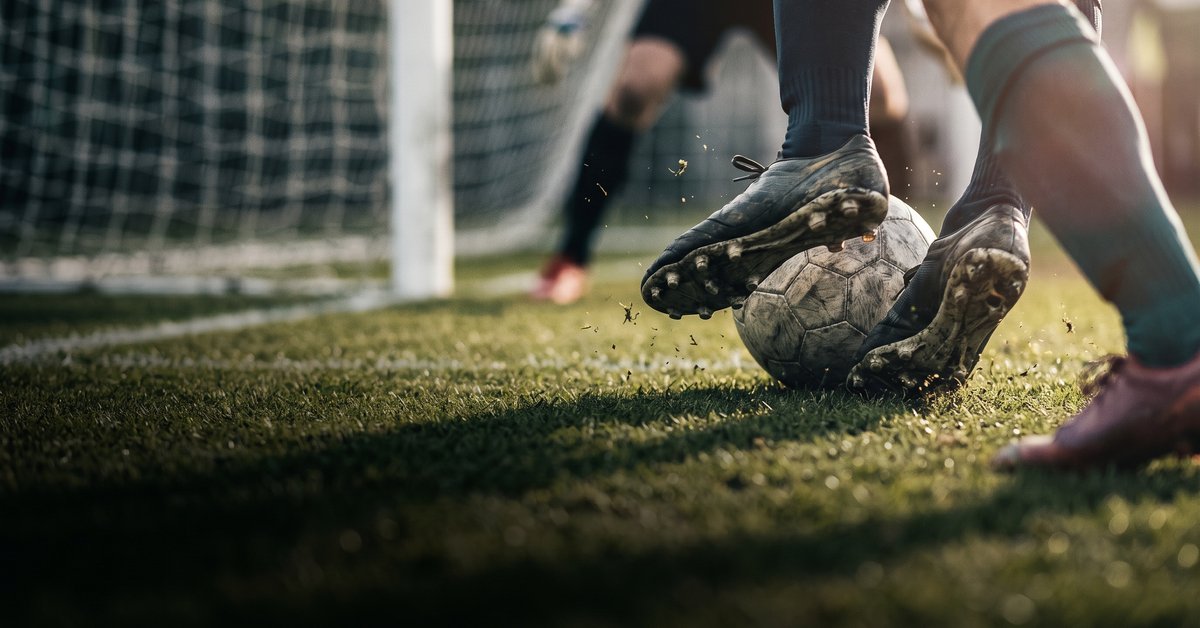
To finish better in football, get into good positions earlier, decide quickly whether to control or shoot first time, strike the ball cleanly towards a target, and stay calm after misses. Finishing is scoring goals, and it is a decision as much as a kick. This guide explains the parts of a good finish and gives five drills young strikers can use.
What finishing really involves
The FA's learning site says a skilful finish is more than the strike. Players need to get into a position that is hard to defend, scan the pitch, move into the right space, judge the flight of the ball, decide whether to control or shoot first time, and strike with the right power — all timed well. Because timing is hard, the FA says players need lots of opportunities to practise.
1. Position and scan
Goals start before the ball arrives. Move into space the defender cannot easily mark, and look around before the pass comes. Our scanning guide shows how.
2. Decide: control or shoot first time?
Waiting for a perfect chance often gives defenders time to close the angle and block the shot. If the chance is good, a quick shot — often with the first or second touch — can catch a keeper and defenders off guard. If the ball is awkward or a defender is about to tackle, a controlling touch may be right. The skill is reading which.
In coaching sessions, the shift usually happens when a player stops waiting to feel ready and starts practising the decision in drill conditions. One player went from consistently holding the ball too long to shooting early in the right moments within four sessions, simply by repeating two-touch finishes and being asked "was that the right call?" after each attempt.
3. Strike the ball well
The FA notes that younger players often use a toe poke or the laces, which need basic movement and create power, and coaches can add the side foot, instep, outside of the foot and volley as players develop. A few principles apply at any age:
- Plant the standing foot beside the ball, pointing at the target.
- Keep your head steady and eyes on the ball at contact.
- Choose a target before you strike — such as the far corner or low across the keeper — rather than just hitting the ball hard.
- Prefer accuracy to power unless you are far from goal. A shot on target can be saved, deflected or rebound; a shot off target cannot.
4. Choose better chances
Analysts measure chance quality with expected goals (xG). Opta's definition says xG "measures the quality of a chance by calculating the likelihood that it will be scored". Its model uses factors including distance, angle, goalkeeper position, pressure from defenders and the type of shot. You do not need a model to learn the lesson: shots from closer, with a better angle and less pressure, are more likely to score. Strikers who find those positions more often get better chances. Understanding decisions is covered in more depth in our football IQ guide.
5. Stay calm after misses
Every striker misses. Dwelling on a miss can make a player hesitate next time, so a short reset helps: a breath, a cue word and a focus on the next movement. Our confidence guide covers routines and self-talk in full.
5 finishing drills
1. Two-touch finish
A coach or partner passes from different angles. The player may take only two touches: one to control, one to shoot. Do 10 attempts, then reduce to a first-time shot from cut-backs.
2. Target corners
Place cones or targets in each corner. Score a point for hitting the target zone and two for scoring from it. This builds accuracy over power.
3. Scan and finish
A partner stands behind the striker and calls a number as the pass arrives. The striker glances, calls the number, then shoots. This links scanning directly into the finish.
4. Pressure finish
A passive defender, then a live defender, closes down from behind. The striker has to decide quickly whether to shoot or take a controlling touch.
5. Rebound reaction
The coach shoots at the keeper from distance and strikers react to rebounds. This trains alertness and the habit of following up.
Start simple, then add realism gradually. The FA says to build confidence with simple techniques before moving to more game-like practice.
How parents can help
Praise good movement and decisions as well as goals. After a match, ask: "Where were you when you got the best chance?" Keep practice short and fun. For a different angle on decisions, try Pitch Pro's match scenarios, free to start.
Frequently asked questions
How can I score more goals?
Get into better positions early, decide quickly whether to shoot, strike towards a target, and practise often with realistic pressure.
Should strikers shoot first time?
Often, when the chance is good. If the ball or situation makes it awkward, a controlling touch is better. Practise both so the decision becomes automatic.
How do I improve shooting accuracy?
Choose a target before striking, plant the standing foot beside the ball, keep your head steady, and practise at a pace you can control before adding power.
What is a good finishing drill?
The two-touch finish is simple: control and shoot with no more than two touches from passes at different angles. It is easy to set up and can be done solo with a rebounder.
Next step
For personal feedback on finishing, book a video analysis (£25) or enquire about 1-to-1 coaching — face to face in Norfolk or online.
About the author: Tito is a UEFA Licensed Coach based in Diss, Norfolk.